

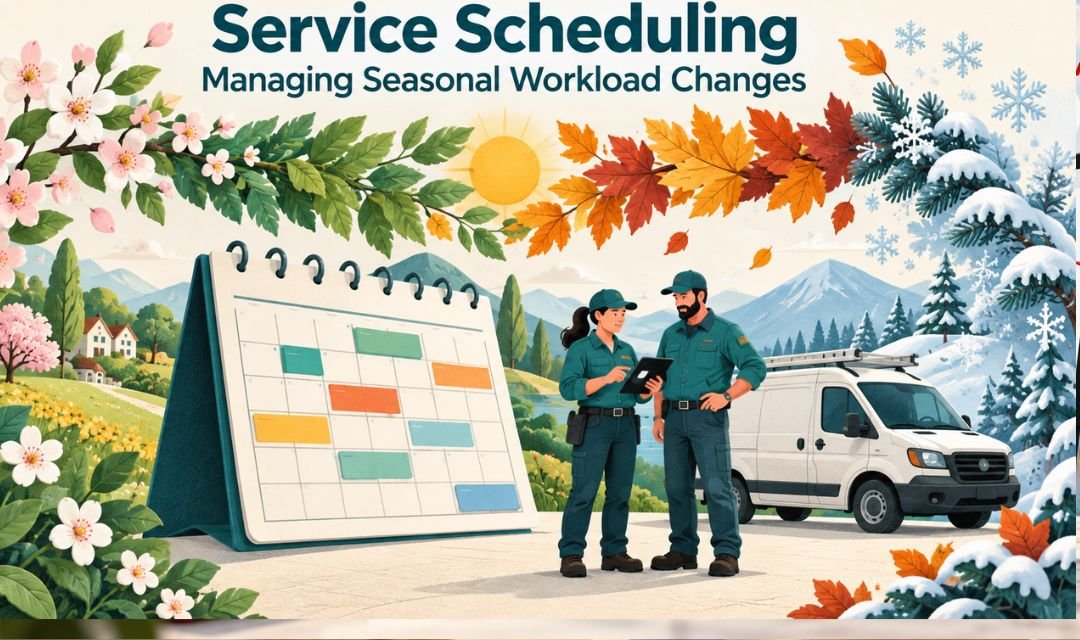
Field workloads rarely remain constant throughout the year. Some industries experience predictable peaks during certain seasons, while others face fluctuating demand caused by weather, customer behavior, maintenance cycles, or unexpected events. When staffing and appointment plans do not reflect these variations, technicians can become overloaded during busy periods and underused during quieter ones.
Effective service scheduling can help organizations prepare for changing demand by matching technician capacity with expected workload. Instead of reacting after schedules become congested, planners can use historical patterns and current conditions to create more realistic plans.
Understand Seasonal Demand Patterns
Seasonal workload changes are often easier to manage when businesses recognize them in advance.
Previous years may reveal periods when appointment volumes increase or particular job categories become more common.
Review Historical Activity
Managers can examine completed schedules to identify recurring peaks.
If a certain month consistently produces more work, planners can prepare technician capacity accordingly.
Service scheduling becomes more accurate when future plans reflect actual demand patterns rather than assumptions.
Adjust Capacity Before Workloads Rise
Waiting until technicians are overloaded makes scheduling changes more difficult.
Where predictable peaks exist, organizations can prepare earlier.
This may involve reviewing technician availability, training requirements, and expected appointment volumes.
Protect Existing Commitments
Increasing demand should not automatically lead to overbooking.
A schedule still needs realistic travel time, job durations, and room for unexpected changes.
Service scheduling helps planners balance additional demand with achievable workloads.
Prioritize High-Impact Work
During busy periods, not every assignment can receive the same scheduling priority.
Some jobs may be urgent, while others can be completed within wider timeframes.
Clear priority rules help dispatchers allocate limited capacity more effectively.
Separate Urgent From Flexible Work
If planners understand which appointments can move, they gain more options when demand spikes.
This reduces the need to reorganize the entire schedule when an urgent request arrives.
Consider Technician Skills
Seasonal demand may increase the need for particular skills.
If only a few technicians can handle high-demand job categories, those employees can quickly become overloaded.
Service scheduling should therefore consider skill availability as well as overall headcount.
Spread Capability Across the Team
Where possible, organizations can use quieter periods to develop broader technician capability.
This creates more scheduling flexibility when seasonal workloads increase.
Manage Geographic Efficiency
Busy periods make route efficiency even more important.
Long or poorly sequenced journeys reduce the number of appointments technicians can realistically complete.
Grouping suitable work geographically can preserve field capacity.
Avoid Excessive Overbooking
A busy season may create pressure to maximize every available time slot.
However, fully packed schedules can become fragile.
One delayed appointment may create several customer problems later in the day.
Service scheduling should maintain enough flexibility to absorb normal variation.
Monitor Workloads During the Peak
Even well-planned schedules need adjustment.
Managers should watch whether expected job durations, travel assumptions, and technician capacity remain accurate as demand changes.
Learn While the Season Is Active
If certain assumptions prove unrealistic, planners can adjust future schedules immediately rather than waiting until the peak has ended.
Review the Season Afterwards
Once demand returns to normal, organizations can examine what worked and what created difficulty.
These lessons can improve preparation for the next high-demand period.
Conclusion
Service scheduling can help organizations manage seasonal workload changes by combining historical demand patterns with realistic technician capacity. Early preparation, clear priorities, skills awareness, geographic planning, and flexible schedules all reduce the risk of overload during busy periods. Reviewing performance while demand is high also allows teams to adjust assumptions quickly. By learning from each seasonal cycle, businesses can create increasingly accurate schedules that protect technician productivity and customer commitments during periods of increased field activity.