

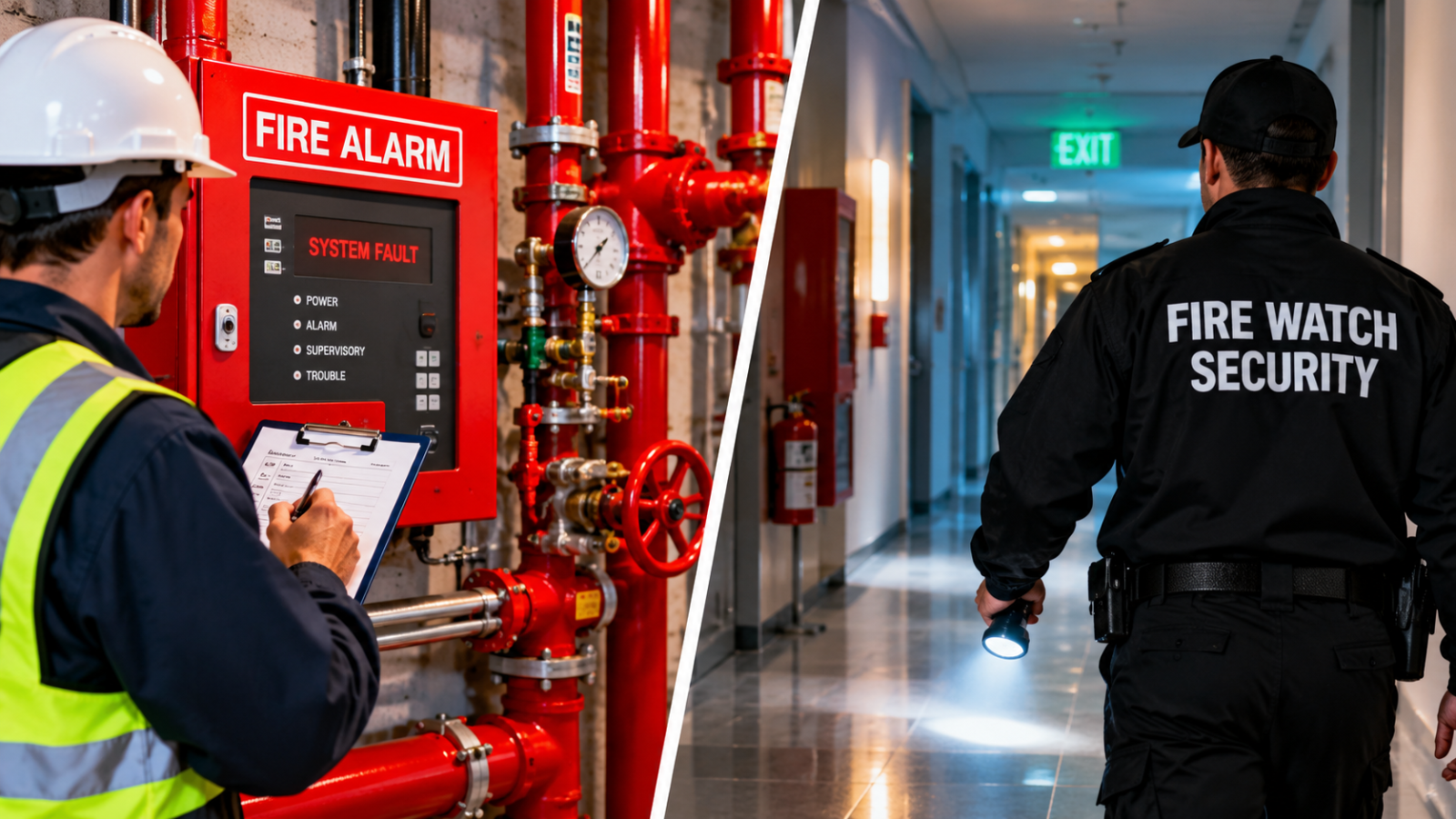
When there is an abrupt failure of the building life safety infrastructure system, there is immediate escalation in the risk level within the building. If not done instantly, property owners and property managers will incur immediate fines, legal liabilities, and risks to life within the building, in case the necessary physical monitoring processes are not put in place.
Effective management of the fire protection systems during unplanned outages entails organized management of system downtime, proper human supervision, and compliance documentation. Utilizing the services of a competent fire watch company is the sure way of ensuring that there is full risk prevention during fire protection system outages.
Identification of System Impairment Causes
Life safety systems fall under impairment as a result of scheduled maintenance, system retrofitting, or unexpected part malfunction. The property manager is supposed to identify if the system impairment is a planned or an emergency type.
- Planned: Scheduled suppression system upgrades, pipeline cleaning, or control panel replacement.
- Emergency: Pipeline burst, freeze of sprinkler heads, or lightning-strike of the control board.
Executing Immediate AHJ Notifications
As per NFPA Standards, there are requirements to notify your local AHJ should there be a downtime for the fire alarm system beyond certain limits. Most AHJs require that a notification be provided whenever the downtime goes beyond four hours in any 24-hour period.
A notification should include a description of the extent of the problem, estimated time for repairs, and immediate risk reduction steps.
| Outage Duration | System Status | AHJ Action Required | Monitoring Protocol |
|---|---|---|---|
| Under 4 Hours | Minor Impairment | Log internal record | In-house staff check |
| 4 to 24 Hours | Major Impairment | Direct AHJ notification | Dedicated fire watch |
| Exceeding 24 Hours | Critical Outage | Daily AHJ status updates | Continuous 24/7 patrol |
Implementing Continuous Physical Patrols
When active fire suppression or detection systems go offline, trained human patrols replace automated warnings. Professional staff need to regularly patrol all areas affected, maintaining visual coverage of blind spots in the structure, mechanical rooms, and main egress corridors.
- Floor Patrols: Done at intervals of 15 to 30 minutes in occupied buildings.
- Hazard Checks: Immediate assessment of open exits and working emergency lighting.
- Hot Work Oversight: Monitoring active construction zones for thermal flare-ups.
Professional guards provide systematic tracking that internal maintenance staff cannot handle alongside routine operations.
Maintaining Mandatory Compliance Logs
Compliance with regulations totally depends upon keeping accurate records. During a period of impairment, the patrol guard will have to make a check at set times. Missing entries can result in immediate stop-work orders or costly municipal citations.
Every entry must record the date, exact time, guard name, specific zones inspected, and any identified hazards. These records remain on-site for Fire Marshal inspection until the primary fire protection system passes full testing and returns to active status.
Contracting Certified Security Partners
The outsourcing of physical patrolling to an independent fire watch service will shift the liability burden on the provider while ensuring compliance with all regulations.
To have complete coverage and fast guard deployment, contact Fast Fire Watch Guards to provide you with well-trained staff in case of any system downtime.
FAQ
What defines a system failure?
A system failure is an event where the fire protection system, which includes sprinkler, standpipe, or alarm panel systems, becomes non-operational.
What time frame should a fire watch begin after an outage?
Most local fire codes require physical patrols to begin immediately after an outage exceeds 4 hours, or instantly during high-risk commercial operations.
Can onsite maintenance staff perform fire watch duties?
While legally permissible in some jurisdictions, dedicated staff must have no other duties during their shift to maintain compliance.
Restoring Full Operational Safety
System impairments test a building’s operational readiness and risk management protocols. Proactive preparation transforms complex code requirements into simple execution steps. Pre-approved vendors and communication channels will be beneficial in ensuring quick responses in the event of a failure. Documentation will be useful in protecting the building’s resources, the safety of the people living within, and compliance with stringent rules. Always being alert will be the way to avoid any problem.