

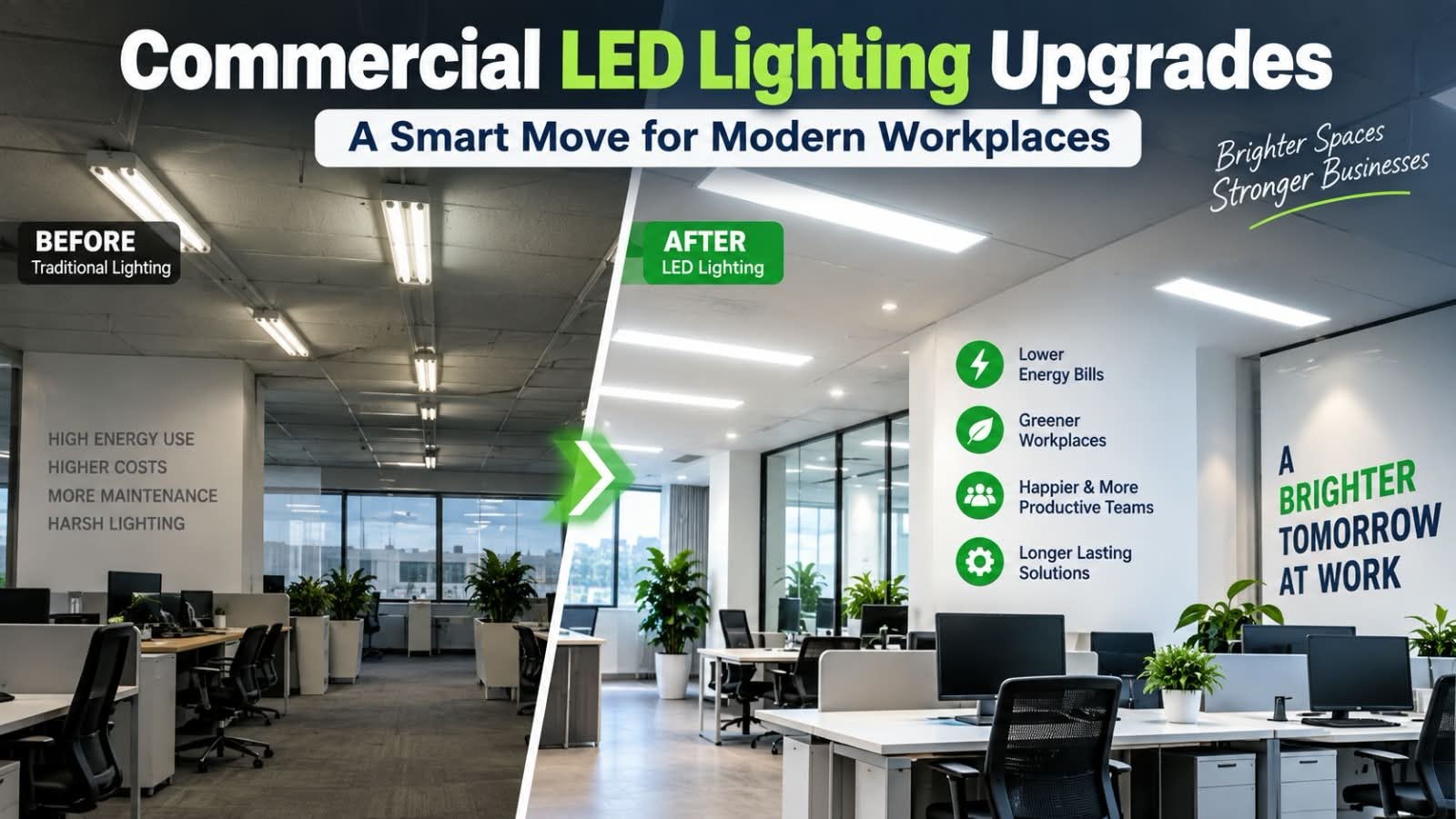
Walk into any modern office, warehouse, or retail space today, and you’ll likely notice something different about the lighting. Gone are the flickering fluorescent tubes and harsh overhead glares of decades past. In their place: sleek, efficient LED fixtures that quietly do their job without drawing much attention at all. That’s exactly the point.
Commercial LED lighting has become a cornerstone of workplace design, not just for its aesthetic appeal but for the tangible benefits it delivers. As businesses look for ways to cut costs, reduce their environmental footprint, and create healthier work environments, commercial lighting upgrades have moved from a “nice-to-have” to a strategic priority. This shift isn’t just about swapping bulbs. It’s about rethinking how light impacts operations, budgets, and people.
Why Upgrade to Commercial LED Lighting
The case for upgrading starts with energy consumption. Traditional lighting systems, like incandescent and fluorescent fixtures, waste a significant amount of energy as heat rather than usable light. LEDs, by contrast, convert most of their energy directly into light, using substantially less electricity to produce the same brightness.
That efficiency translates directly into savings. Lower energy use means lower utility bills, and because LED fixtures last far longer than traditional bulbs, maintenance costs drop too. Facility teams spend less time replacing burnt-out tubes and more time focusing on other priorities.
There’s also a sustainability angle that matters more each year. Reduced energy draw means a smaller carbon footprint, which is increasingly important for businesses working toward environmental, social, and governance (ESG) goals or simply trying to operate more responsibly.
Beyond the balance sheet, lighting affects people. Poor lighting has been linked to eye strain, fatigue, and even mood disturbances. Upgrading to well-designed commercial lighting can support alertness, reduce headaches, and contribute to a more comfortable, productive workplace overall.
Key Benefits of Commercial Lighting Upgrades
The advantages of switching go beyond the obvious energy savings.
Improved light quality. LED fixtures typically offer more consistent, glare-free illumination, which reduces eye strain during long workdays, particularly in offices where employees stare at screens for hours at a time.
Longer fixture lifespan. Where traditional bulbs might need replacing every year or so, quality LED fixtures can last well over a decade with regular use. That means fewer disruptions and lower long-term replacement costs.
Dimming and control flexibility. Many commercial LED systems now come with smart controls, allowing businesses to adjust brightness based on time of day, occupancy, or task type. This flexibility helps further reduce energy waste while giving employees more control over their immediate environment.
Better color rendering. LEDs generally offer a higher color rendering index (CRI), meaning colors appear more true-to-life. This matters in settings where accuracy counts, like design studios, retail displays, or quality control stations on a production floor.
Implementation Considerations for Your Workplace
Before diving into a full lighting overhaul, it helps to take stock of what’s already in place. A thorough assessment of the current lighting infrastructure, including fixture types, wattage, placement, and usage patterns, gives businesses a clear starting point and helps identify where upgrades will have the most impact.
Not all spaces have the same lighting needs. An open-plan office might benefit from bright, uniform lighting paired with task lamps at individual desks, while a warehouse may need high-bay LED fixtures designed for ceiling heights and broader coverage. Choosing the right fixtures for each area ensures the investment actually solves the problems it’s meant to address.
Working with professional installers also makes a meaningful difference. Experienced electricians and lighting designers understand how to balance brightness, placement, and energy codes, and they can help avoid costly missteps that come with a DIY approach to commercial-scale projects.
Finally, timing matters. Rather than shutting down operations for a disruptive overhaul, many businesses phase their lighting transition in stages, upgrading one department or floor at a time to minimize downtime while still moving toward full modernization.
Bringing It All Together
Upgrading to commercial LED lighting isn’t just about brighter rooms. It’s a practical investment that touches energy bills, maintenance schedules, sustainability goals, and even how employees feel at the end of a workday. The technology has matured to the point where the upfront investment often pays for itself through years of reduced operating costs.
For businesses still relying on outdated lighting systems, now’s a reasonable time to take a closer look. A simple lighting audit can reveal opportunities that might be easy to overlook but could lead to real, lasting improvements. Whether it’s a small office or a sprawling warehouse, evaluating your current setup is the first step toward a smarter, more efficient workplace.