

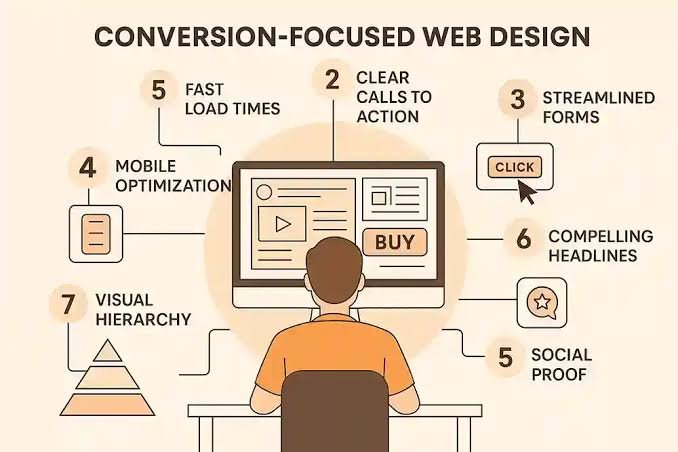
A well-designed website should do more than look attractive. It should guide visitors towards meaningful actions, whether that means submitting an enquiry, requesting a quotation, booking a consultation or making a purchase. For businesses investing in digital marketing, attracting traffic is only part of the challenge. The real opportunity lies in turning that traffic into valuable leads and customers.
This is where conversion focused website design becomes essential. By combining intuitive layouts, persuasive messaging and strategically positioned calls-to-action, businesses can create online experiences that support their commercial goals.
Rather than relying on visual appeal alone, a conversion-focused approach considers how visitors behave, what information they need and what encourages them to take the next step. When supported by effective conversion rate optimisation, even relatively small design improvements can contribute to stronger engagement and better lead generation.
Understanding the Journey from Visitor to Customer
Every website visitor arrives with a particular goal. Some are researching potential solutions, while others are ready to contact a business or make a purchasing decision. Understanding these different intentions is the foundation of successful website design.
A well-planned user journey helps visitors move naturally from their initial point of entry towards a relevant conversion opportunity.
For example, someone visiting a service page may want to understand what the business offers, review examples of previous work and assess whether the company can meet their requirements before submitting an enquiry.
Businesses can improve these journeys by:
- Organising website navigation around visitor needs.
- Presenting important information in a logical sequence.
- Removing unnecessary steps between pages and enquiries.
- Providing clear pathways to relevant services.
- Ensuring contact options remain easy to find.
When visitors can find information without confusion, they are more likely to remain engaged and consider taking action.
Creating Calls-to-Action That Encourage Engagement
Calls-to-action, commonly known as CTAs, are among the most important elements of lead generation websites. They help bridge the gap between someone browsing a website and someone becoming a potential customer.
However, simply adding buttons throughout a page does not guarantee better results. Effective CTAs need to communicate a clear benefit and appear at the right stage of the visitor’s journey.
For example, a service page might feature ‘Request a Free Consultation’, while an educational article could encourage visitors to ‘Explore Our Services’.
Strong calls-to-action should:
- Use clear, action-oriented wording.
- Stand out visually without overwhelming the page.
- Appear naturally alongside relevant content.
- Explain what happens after clicking.
- Work effectively across desktop and mobile devices.
Businesses should also consider whether their CTAs reflect visitor readiness. Someone researching solutions may prefer to download a guide, while a visitor comparing providers may be ready to request a quotation.
Matching CTAs to user intent creates a more relevant experience and can encourage higher-quality enquiries.
Building Landing Pages Around Clear Conversion Goals
Landing pages play a particularly important role in digital campaigns because they are often the first interaction between a potential customer and a business.
Unlike general website pages, effective landing pages typically focus on one primary objective. This could involve generating enquiries, securing consultation bookings or encouraging visitors to complete a registration form.
A successful landing page should communicate its value proposition immediately. Visitors need to understand what is being offered, why it matters and what action they should take.
Important elements include a compelling headline, concise supporting information, relevant imagery and a prominent CTA.
For businesses using paid advertising, consistency between advertisement messaging and landing page content is particularly valuable. Visitors should find the information they expected when clicking through.
Reducing unnecessary navigation links, shortening forms and positioning essential benefits above the fold can also help minimise distractions.
These practical website conversion tips encourage visitors to concentrate on the intended action without feeling pressured or overwhelmed.
Using Trust Signals to Build Confidence and Credibility
Even when visitors find a website attractive and easy to navigate, they may hesitate before submitting personal information or contacting a business.
Trust signals help address these concerns by demonstrating credibility, expertise and reliability.
Customer testimonials, independent reviews, professional accreditations and detailed case studies can all help reassure potential customers that they are making an informed decision.
For service-based businesses, showcasing previous projects is particularly useful. Real examples allow visitors to understand the company’s capabilities and the outcomes it has delivered.
Other useful trust-building elements include transparent contact details, clear service information, privacy notices and genuine customer feedback.
These signals should be positioned strategically throughout the website rather than confined to a single testimonials page.
For example, displaying a relevant client review alongside a service description can strengthen confidence at the point where a visitor is considering an enquiry.
Ultimately, visitors are more likely to engage when they feel confident about the business behind the website.
Improving Mobile Experience and Website Performance
A conversion-focused website must deliver a consistent experience across different devices. Mobile visitors should be able to navigate pages, understand content and complete forms without unnecessary difficulties.
Poor mobile layouts, slow-loading pages and difficult navigation can create friction, potentially leading visitors to abandon the website before taking action.
Responsive design helps ensure that page elements adapt appropriately to smaller screens, while performance improvements support a smoother browsing experience.
Businesses should prioritise readable text, accessible navigation menus, appropriately sized buttons and simplified contact forms.
Website speed also deserves attention. Optimising images, reducing unnecessary scripts and maintaining efficient page structures can improve loading performance.
Accessibility is equally important. Clear headings, sufficient colour contrast and properly labelled forms make websites easier to use for a wider audience.
Together, these improvements support better usability and help remove barriers that could otherwise prevent conversions.
Measuring Results and Refining Conversion Performance
Conversion-focused design is not a one-off activity. Visitor behaviour, customer expectations and business priorities can change, making ongoing evaluation essential.
Conversion rate optimisation involves reviewing website performance, identifying potential obstacles and testing improvements that could increase meaningful actions.
Businesses can use analytics platforms, heatmaps and user behaviour recordings to understand how visitors interact with particular pages.
Useful metrics include conversion rates, form completion rates, CTA engagement and landing page performance.
A/B testing can also help compare different headlines, layouts or button placements to determine which variations perform more effectively.
However, increasing the number of enquiries should not be the only objective. Businesses should also consider lead quality and whether website conversions result in genuine commercial opportunities.
Continual testing enables marketing teams to make informed decisions rather than relying entirely on assumptions.
Designing for Better Business Results
An effective business website brings together attractive visuals, straightforward navigation, persuasive content and a clear understanding of visitor expectations. When these elements work together, the website becomes more than an online brochure; it becomes a valuable part of a company’s marketing and sales strategy.
Investing in conversion focused website design helps businesses make better use of existing traffic while creating opportunities to generate more relevant enquiries. From carefully structured landing pages to trustworthy content and streamlined mobile experiences, every improvement can contribute to a smoother customer journey.
For organisations looking to strengthen their digital presence, professional conversion focused website design can provide the foundation for measurable improvements. By combining thoughtful design with ongoing testing and optimisation, businesses can build websites that not only attract visitors but also encourage meaningful engagement and long-term growth.