

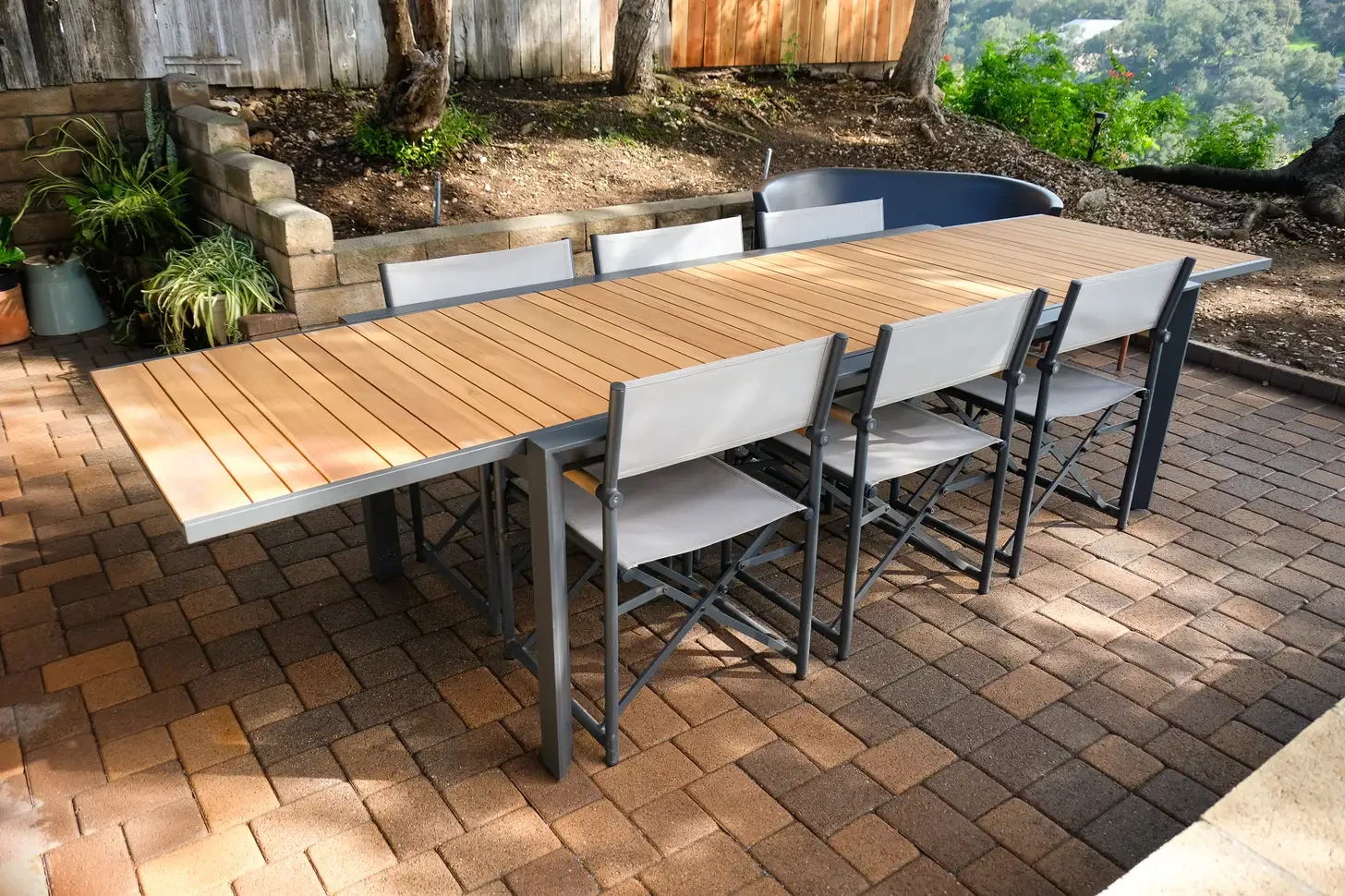
Opening night is the first opportunity for guests to get a feel for a restaurant without seeing its plans. They notice where people gather, where drinks are placed, and whether there’s a comfortable place to pause. On a patio, those choices are especially visible. Furniture becomes part of the welcome before the host’s introduction or the first photograph.
Choosing patio furniture for outdoor restaurant dining for the party should therefore account for both the celebration and the restaurant that will operate afterward. Guests may mingle more than they would during a regular meal, but they still need usable seats and stable surfaces. Plan the event around real activities, then identify which furniture should remain useful once the opening-night decorations are removed.
Decide what kind of party you are hosting
A seated preview dinner needs a different setup from a reception where food is passed around. Write down how guests will eat and drink before deciding on the mix of tables. Food that requires cutlery calls for a usable dining position; a brief welcome drink may suit a different setting.
Talk to the chef and service manager about the program. They can explain whether food will be passed, collected, or served to seated guests. Each approach changes where people gather and how staff reach them. Don’t buy furniture to match a photograph of an event that serves people differently.
Account for the quieter parts of the evening. Some guests will arrive early, sit between conversations, or prefer to stay seated throughout. Give them a natural place in the room when planning the party, rather than assuming everyone wants to stand.
Build the layout around movement
Before setting out tables, mark the guest entrance and the route to the bar. Then add the service route and any check-in area. A decorative grouping near the entrance may look inviting while causing every arrival to pause in the same narrow space.
Think about where a guest goes after receiving a drink. If the nearest surfaces are already occupied, people may cluster around the service point. Give them somewhere useful to move without blocking the route back into the restaurant.
Event layout planning considers access and crowd movement together. A restaurant party is smaller than the mass gatherings covered by many public guides, but the question is still useful: can guests and staff move through the planned activities without competing for space? Have the responsible venue team check the actual layout and capacity.
Use the restaurant’s furniture where it makes sense
An opening-night purchase should support the regular dining plan. Test the proposed chairs and tables as a meal setting, even if the party will use them informally. Confirm that the products suit outdoor use and follow their manufacturer’s instructions.
If a piece serves a temporary purpose and the restaurant doesn’t expect to need it again, rent it for the event. A check-in station or special presentation surface might fit that description. Compare rental with the handling and storage that ownership would require.
Keep the permanent furniture visually related without requiring every piece to look identical. A useful mix can still feel coherent. The practical test is whether each piece has a clear role and staff can maintain the room after the unusual demands of opening night have passed.
Make photographs compatible with service
Pick a photograph location that doesn’t put guests in a service route. An attractive patio background or the restaurant’s sign can work, provided the surrounding area stays usable. Check the space after dark as well as during setup.
Lighting can change how upholstery and tabletops look, so view the furniture under the event lighting before fixing the layout. Watch for reflected glare and faces lost in shadow. Ask the photographer or lighting professional for help instead of compensating by moving furniture into an unsuitable position.
Don’t reserve the most comfortable seats solely as a photographic backdrop. A picture can be taken between service moments, but guests need the furniture all evening. Coordinate any brief clearing of an area with the service team and explain it politely to the people using it.
Plan for guests who arrive before the formal welcome and those who stay afterward. Furniture should remain useful to them while staff prepare or clear other areas. Agree on where cleared items go, so an adjacent table doesn’t become an improvised collection point.
Brief the photographer and any promotional team on that service plan. If they want an empty setting for a picture, schedule it before arrival or during an agreed pause. Guests should not have to surrender their place repeatedly because different teams have not coordinated their work.
Give the welcome remarks a clear place
If the owner will speak, decide where guests should look and listen. A patio arranged entirely for conversation may leave some seats facing away from the presentation. Choose the speaking position with the occupied layout in mind.
Check the microphone and any other equipment before arrival. Keep cables and technical equipment within the plan prepared by qualified staff. Last-minute adjustments should not introduce an obstruction that the original furniture arrangement avoided.
The Event Safety Alliance advocates event planning that considers safety from production through operation. Apply that idea to small decisions as well as the formal plan. Whoever organizes the remarks should coordinate with the people responsible for the patio before the room fills and a presentation becomes a last-minute addition.
Prepare for weather before invitations go out
An outdoor celebration needs a workable weather alternative. Decide whether the restaurant can move the event inside, change its format, or postpone it. The invitation should reflect the arrangement without promising conditions that nobody can control.
National Weather Service lightning guidance calls for waiting at least 30 minutes after the last thunder before resuming outdoor activity. A patio umbrella is not an appropriate lightning shelter. The event plan should identify suitable shelter and the person responsible for weather decisions well before the guests arrive.
Ask the furniture supplier for weather-related handling and storage instructions, keeping those tasks separate from moving people to safety. Employees should not delay sheltering guests to collect cushions or rearrange tables. Plan property protection in advance. Decisions during a developing hazard must follow the event’s safety procedure.
Rehearse the patio with the service team
Before opening the doors, walk through the evening from a guest’s point of view. Arrive at check-in, collect a drink, find a seat, and locate the facilities. Then repeat the route as a server carrying the equipment that will actually be used.
A short final review should cover:
- Furniture condition and stable placement on the patio surface.
- Clear guest and service routes.
- Seating choices for people who prefer or need to sit.
- The agreed response to changing weather.
Photograph the approved layout for the team that may need to restore it during the event. Make sure someone has authority to stop a furniture change that interferes with the plan. A busy room can drift from its original arrangement surprisingly easily.
During the rehearsal, test a small interruption as well as the planned sequence. Imagine that a table must be taken out of use after a spill or that a guest asks to move away from the speaker. Identify where staff can offer another suitable place and how they will keep the affected area clear. The answer should come from the approved layout, without borrowing furniture from a route or assuming every occupied table can be rearranged.
Give the host that information alongside the event schedule. A clear response helps the team handle an ordinary request while the rest of the party continues.
Let the Celebration Introduce the Restaurant
Opening night should show how the restaurant wants to welcome people on an ordinary evening. Choose furniture that supports conversation and the food being served, with enough room for each activity. The event feels more convincing when guests can use the setting comfortably instead of navigating around a display.
After the party, ask the service team which arrangements worked and which created friction. Compare those observations with the normal dining plan before settling into the regular routine. The opening then becomes a useful first service as well as a celebration, with the patio ready to build its own history of meals and returning guests.