

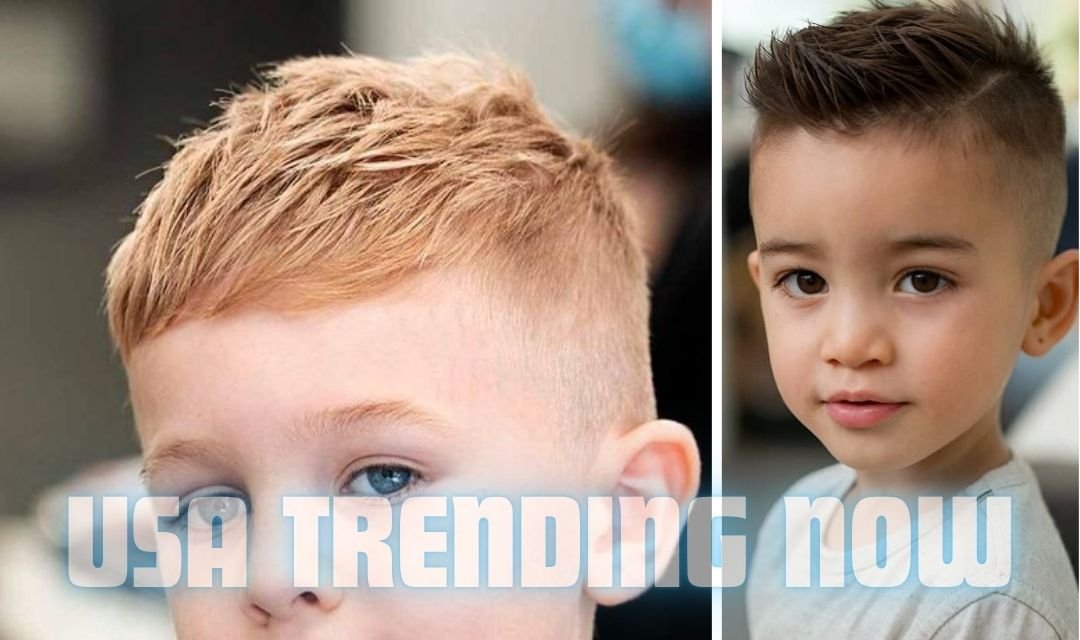
Short Fade Little Boy Haircuts are a great choice for parents who want their child’s hair to look neat, modern, and easy to manage. A fade keeps the sides and back short while leaving enough hair on top for texture, curls, spikes, or a simple comb-over. Current short haircut ideas for boys show that fades, crew cuts, textured crops, and short tapered styles remain especially popular because they work well for school, sports, parties, and everyday play. The best part is that a little boy can look stylish without spending a long time fixing his hair every morning.
Quick Guide to Short Fade Little Boy Haircuts
| Haircut | Best For | Styling Needed | Maintenance |
|---|---|---|---|
| Low Fade | Most boys | Very little | Every 3–4 weeks |
| Mid Fade | Thick or straight hair | Low | Every 3–4 weeks |
| High Fade | Bold short styles | Low | Every 2–4 weeks |
| Skin Fade | Very clean look | Low | Frequent |
| Taper Fade | School-friendly style | Very low | Easy |
| Textured Crop Fade | Thick or fine hair | Light product | Easy |
| Crew Cut Fade | Active boys | Almost none | Very easy |
| Curly Top Fade | Curly hair | Moisture/cream | Moderate |
| Buzz Cut Fade | Hot weather/sports | None | Very easy |
| Side-Part Fade | Smart occasions | Light styling | Moderate |
| Spiky Fade | Straight hair | Small amount of product | Easy |
| Caesar Fade | Short straight hair | Very little | Easy |
Modern haircut guides for children continue to recommend short styles because they are practical and can be adapted to straight, wavy, curly, thick, or fine hair.
What Is a Short Fade Haircut for Little Boys?
A fade is a haircut in which the hair gradually changes from very short around the sides and back to longer hair higher on the head.
Imagine drawing a line from the bottom of the hair upward.
At the bottom, the hair may be extremely short.
Then it gets slightly longer.
Then longer again.
By the time you reach the top, there is enough hair for styling.
A good barber makes those different lengths blend together smoothly so that you cannot see obvious lines.
That smooth change is called the fade.
For children, fades are especially useful because the sides stay neat while the top can still look playful.
Why Parents Like Short Fade Little Boy Haircuts
Little boys rarely spend the whole day sitting still.
They run.
They play football.
They climb.
They go to school.
They put hats on.
They take hats off.
And somehow their hair is expected to survive all of it.
That is one reason short fades work so well.
There simply is not much hair around the ears and neck to become messy.
Short haircut specialists also point out that fades and cropped styles can require very little daily styling, although sharper fades need regular barber visits if parents want them to stay freshly defined.
Here are 25 ideas worth considering.
1. Classic Low Fade With Short Top
A low fade is one of the safest choices for a little boy.
The fade begins low around the ears rather than climbing far up the head.
The top remains short and natural.
It looks clean without appearing too grown-up.
This style works especially well for school because it is tidy but not dramatic.
Parents who are trying a fade for the first time may want to start here.
Current barber guides also recommend low taper fades for younger boys because they grow out relatively naturally and can be refreshed about every three to four weeks.
2. Short Textured Crop With Fade
The textured crop is one of the coolest modern options.
The sides are faded.
The top is cut into small uneven layers.
Instead of perfectly combing every hair into place, the barber creates texture so that the hair looks naturally messy.
That is useful for children because their hair probably becomes messy anyway.
With this haircut, messy can actually be the style.
Short textured crops are among the current recommended short cuts for boys because they combine easy maintenance with movement on top.
3. Crew Cut With Low Fade
The crew cut has been around for generations.
There is a reason.
It works.
Hair stays short on top with even shorter sides.
Add a low fade and the classic crew cut suddenly feels modern.
This is one of the best choices for an active boy who dislikes combing or styling his hair.
Wake up.
Brush it quickly.
Done.
4. Mid Fade With Textured Top
A mid fade starts higher than a low fade but lower than a high fade.
It gives more contrast.
Keep two or three inches on top and ask the barber to add texture.
The result looks stylish without becoming difficult to maintain.
This works particularly well for thick hair because removing more hair from the sides reduces bulk.
5. High Fade With Short Hair
A high fade starts much higher on the sides.
That makes the top stand out more clearly.
This haircut has a sharper, sportier appearance.
It can look excellent with:
a crop,
short spikes,
a crew cut,
or a tiny quiff.
The downside is that the contrast becomes obvious as the sides grow.
Parents who want a constantly fresh high fade may need more frequent barber visits.
6. Short Skin Fade
A skin fade takes the bottom section extremely short—sometimes almost completely down to the skin.
Then the barber blends upward.
The result can look incredibly clean.
It is also useful during hot weather because very little hair remains around the neck and ears.
However, this is one style parents should discuss with the child first.
Some children love very short sides.
Others dislike the feeling.
7. Taper Fade for School
A taper fade is softer than an aggressive skin fade.
The shortest areas are usually concentrated near the sideburns and neckline.
That means the haircut remains neat without removing too much hair.
If your child’s school prefers traditional-looking hairstyles, a taper fade is one of the safest options.
It grows out nicely too.
8. Short Spiky Hair With Fade
Little boys have been wearing spikes forever.
The modern difference is the fade.
Keep the top about one or two inches long.
Fade the sides.
In the morning, use a tiny amount of child-friendly styling cream or light paste and lift the front.
Do not turn every hair into a stiff spike.
Soft, slightly messy spikes usually look more natural.
Current short-hair guides recommend textured spiky fades particularly for straight or slightly wavy hair.
9. Messy Top With Low Fade
Not every haircut should look perfect.
Sometimes a little mess makes a child’s hairstyle cuter.
Ask for a low fade and leave extra texture on top.
After washing, allow the hair to dry naturally.
Use your fingers instead of a comb.
That gives the top movement while the faded sides keep everything looking tidy.
10. Buzz Cut With Fade
If you want almost zero morning styling, this is difficult to beat.
The top is buzzed short.
The sides are faded even shorter.
It works especially well for:
sports,
summer,
very active children,
and boys who dislike having hair brushed.
Another advantage is that shampooing takes seconds.
11. Buzz Cut With Line-Up
A line-up gives a buzz cut more definition.
The barber carefully cleans the front hairline and areas around the temples.
Combined with a fade, it creates a very crisp finish.
This style is especially common with naturally dense or tightly curled hair.
The key is not to force an unnatural hairline.
A good barber should work with the child’s natural growth pattern.
12. Short Curly Top With Fade
Curly hair does not need to be straightened to work with a fade.
In fact, curls and fades can look fantastic together.
Keep the natural curls visible on top.
Remove bulk from the sides.
The contrast makes the curls stand out.
For curly hair, focus more on moisture than heavy styling products.
A small amount of leave-in conditioner or curl cream can help keep the top soft.
13. Low Fade for Black Boys
A low fade is an excellent option for Black boys because it can complement many natural textures while keeping the edges clean.
The top might be:
short curls,
waves,
a mini Afro,
or simply closely cut natural hair.
A current children’s hairstyle guide specifically recommends low bald fades as a neat option that highlights the top texture.
The barber should adjust the fade to the child’s natural density and scalp sensitivity rather than copying another child’s haircut exactly.
14. Mini Afro With Taper Fade
If your child loves his natural curls, there is no need to remove them.
Keep a small Afro on top.
Taper only the temples and neckline.
This gives the haircut a shape while preserving plenty of natural texture.
It also grows out more gently than a high skin fade.
15. Waves With Low Fade
For boys with the right hair texture, short waves paired with a low fade create a very polished look.
The top stays short enough for the wave pattern to remain visible.
The fade creates contrast around it.
Maintaining waves may require more brushing than a basic crew cut, so it is better for a child who actually enjoys the style.
16. Caesar Cut With Fade
The Caesar is short and simple.
Hair on top is brushed forward.
A small fringe sits across the front.
Add faded sides and it becomes much more modern.
Recent kids’ haircut guides highlight layered Caesar cuts combined with short fades as a current option for 2026.
This is a particularly useful haircut when the child has hair that naturally wants to fall forward.
Instead of fighting it, the haircut uses that movement.
17. French Crop With Fade
The French crop is similar to a Caesar but usually has more texture on top.
The fringe may also look slightly rougher or more uneven.
It is great for boys with thick straight hair.
Best of all, the hair is supposed to sit forward.
No complicated combing needed.
18. Side-Part Fade
Some occasions call for something smarter.
Think:
school photographs,
weddings,
birthday parties,
or family celebrations.
A short side-part fade works beautifully.
The barber leaves enough length on top to comb to one side while keeping the sides neat.
Use only a small amount of lightweight product.
Children’s hair usually looks better when it can still move.
19. Comb-Over With Low Fade
A comb-over does not have to look old-fashioned.
A modern children’s version can be very simple.
Keep the top slightly longer.
Create a low fade.
Brush the hair loosely to one side.
You do not even need a sharp part.
This haircut also gives parents flexibility because the top can be worn messy on casual days and neat for special occasions.
20. Short Quiff With Fade
A quiff adds a little height at the front.
For children, keep it small.
You do not need a giant wave of hair.
Ask the barber for short faded sides with around two inches at the front.
A small amount of styling cream can then push the front upward.
This works especially well with thick, straight hair.
21. Faux Hawk Fade
Does your little boy want something adventurous?
Try a faux hawk.
Unlike a full mohawk, the sides are not completely separated from the top.
The hair gradually becomes longer toward the middle.
A fade creates the contrast.
It looks exciting when styled upward, but the same haircut can often be brushed down for school.
That makes it more practical than a true mohawk.
22. Burst Fade With Short Curls
A burst fade curves around the ear.
Instead of fading evenly around the entire head, the barber creates a rounded faded area.
Pair that with curls on top and the result looks fun and modern.
This style usually needs a skilled barber because the shape matters.
Bring a picture so there is no confusion.
23. Fade With a Simple Hair Design
Some children love adding a little design.
A single shaved line can make the haircut feel special without becoming too dramatic.
Lightning bolts and other designs also appear in current boys’ haircut inspiration.
But remember:
the design grows out quickly.
That can actually be useful.
Your child can try something fun without making a long-term commitment.
24. Short Mohawk Fade
This is the bolder version.
Keep the middle section noticeably longer.
Fade the sides closely.
Then style the center upward.
A short mohawk is easier for young children than a very tall version because it requires less product and less time.
Current toddler haircut collections continue to feature mohawk and fade combinations among adventurous children’s styles.
25. Natural Short Fade
Sometimes the best haircut is the simplest.
Tell the barber:
“Keep his natural texture on top and give him a soft fade around the sides.”
That is enough.
No hard part.
No giant fringe.
No design.
No complicated styling.
This works because a good fade does not need extra decoration.
Low Fade vs Mid Fade vs High Fade for Little Boys
These three terms can confuse parents.
Here is the easy explanation.
Low Fade
Starts near the ears.
It looks softer and more traditional.
Best for: first fades, school haircuts, younger children.
Mid Fade
Starts around the middle of the sides.
It gives more contrast.
Best for: textured crops, spikes, thick hair.
High Fade
Starts high near the temples.
It produces the strongest contrast between the top and sides.
Best for: bold styles, buzz cuts, short crops.
If you are uncertain, choose the low fade first.
You can always go higher next time.
Which Short Fade Is Best for a Toddler?
Toddlers usually need simplicity.
A very detailed skin fade may require the child to sit still for longer than he wants.
A soft taper or low fade can often be easier.
Current toddler haircut recommendations include classic crew cuts, tapered fades, and short easy-care styles because they keep hair comfortable while requiring minimal styling.
Think about comfort before trendiness.
A great haircut is not great if the child hates getting it.
Best Fade for Straight Hair
Straight hair works with almost everything.
Good choices include:
crew cut fade,
textured crop,
spiky fade,
side part,
French crop,
and short quiff.
If the hair is extremely fine, avoid leaving the top too long because it may fall flat.
Texture can make fine hair appear fuller.
Best Fade for Thick Hair
Thick hair is perfect for a fade because removing bulk from the sides makes everything easier to control.
Try:
mid fade with textured top,
crop fade,
short quiff,
or messy top fade.
Ask the barber to remove some weight from the top rather than simply cutting one heavy straight line.
Best Fade for Curly Hair
Keep the curls.
That is usually the best advice.
A fade can give curly hair shape without removing what makes it special.
Try:
low fade with curls,
taper fade with curls,
mini Afro taper,
or burst fade.
Avoid heavy gels that make a young child’s curls hard and crunchy.
How Often Does a Little Boy Need a Fade?
A very crisp fade starts losing its freshly cut appearance after a few weeks.
Hair grows.
That is normal.
Current barber guidance generally suggests around three to four weeks for maintaining a neat children’s fade, while extremely sharp skin fades may need more frequent cleanups.
You do not have to visit that often.
A fade can still look good while growing out.
It simply becomes softer.
How to Explain the Haircut to the Barber
Parents sometimes say:
“Give him a fade.”
But there are many kinds of fades.
Instead, say something like:
“Low fade around the sides, not down to completely bare skin, and leave about two inches textured on top.”
That gives the barber much more information.
Better still, show a picture.
A picture avoids confusion about words such as:
short,
low,
textured,
messy,
or skin fade.
Your version of “short” may be completely different from the barber’s.
Should You Let Your Child Choose?
When possible, yes.
A haircut can be a small way for a child to express personality.
Show him three or four appropriate choices rather than fifty.
For example:
“Do you like this low fade, this spiky one, or this curly one?”
That gives him some control without making the decision overwhelming.
Current children’s haircut trends increasingly reflect kids choosing styles that match how they want to look, particularly as they get older.
Easy Styling Routine for School Mornings
A good children’s haircut should not require a 20-minute routine.
For most short fades:
Wet or brush the top.
Use fingers to put it in place.
If needed, use a tiny amount of lightweight styling cream or matte paste.
Done.
Avoid using too much product.
If the child’s hair looks shiny and feels hard, there is probably more product than necessary.
Short styles are supposed to make mornings easier.
How to Make the Haircut Last Longer
You cannot stop hair growing, but you can keep it looking tidy.
Brush or comb it regularly.
Wash it when necessary rather than piling product onto dirty hair.
Keep the neckline tidy only if you know how to trim safely.
Do not attempt to repair the entire fade with clippers unless you are comfortable using them.
A bad home “touch-up” can quickly turn into a much shorter haircut than planned.
What to Consider Before Choosing a Fade
Do not choose a haircut based only on one photograph.
Think about your child’s:
hair texture,
hair density,
growth direction,
comfort,
school rules,
and willingness to style it.
A picture may show thick straight hair.
Your child may have fine curls.
The same haircut will not look exactly the same.
Ask the barber to adapt the idea rather than copy it blindly.
That usually produces the best result.
Final Thoughts
Short Fade Little Boy Haircuts work so well because they combine two things parents need: style and practicality.
The sides stay clean.
The top can show personality.
A low fade can look gentle and school-friendly.
A high fade can feel sporty.
A textured crop creates a modern look.
A crew cut keeps mornings unbelievably simple.
Curls can stay natural.
And a small shaved design can make haircut day feel exciting.
Current children’s hairstyle guides continue to emphasize fades, cropped textures, crew cuts and other short styles because they can be easy to maintain while working with many different hair types.
There is no single “best” haircut for every little boy.
The best one is the haircut that fits your child’s hair and personality.
For a first fade, start simple with a low taper or low fade.
If he loves it, experiment later.
Try texture.
Try spikes.
Try curls.
Try a tiny design.
Hair grows back, which makes childhood the perfect time to have a little fun with it.
Frequently Asked Questions About Short Fade Little Boy Haircuts
What is the best fade haircut for a little boy?
A low fade with a short textured top is one of the easiest choices because it looks clean without being too dramatic.
Are fade haircuts good for toddlers?
Yes, especially soft taper fades and low fades. For very young children, choose a simple version that does not require them to sit still for an extremely detailed haircut.
What is the easiest short haircut for a boy?
A crew cut, buzz cut, or short crop with faded sides requires very little daily styling.
What is a low fade for boys?
A low fade begins near the ears and neckline and gradually becomes longer as it moves upward.
What is a skin fade?
A skin fade takes the shortest part of the sides very close to bare skin before blending into longer hair.
Is a skin fade suitable for little boys?
It can be, but some children may prefer the softer feeling and easier grow-out of a taper or low fade.
How long should the hair be on top?
For an easy short style, around one to three inches gives enough hair for texture, spikes, curls, or a small side sweep.
How often should a boy get his fade cut?
Around every three to four weeks can keep a fade sharp, although families can wait longer if they do not mind a softer grown-out look.
What fade looks best with curly hair?
Low fades, taper fades and burst fades all work well with curls because they keep natural texture visible on top.
What fade is best for thick hair?
A mid fade with a textured crop can remove heavy bulk from the sides while making thick hair on top easier to control.
What fade is best for fine hair?
A low or mid fade combined with short textured layers can help the top appear fuller.
Can little boys have hair designs with a fade?
Yes. Simple shaved lines, lightning bolts and other small designs can be added to the faded area. They normally grow out quickly.
Are fade haircuts allowed at school?
Usually, simple low and taper fades are school-friendly, but uniform and grooming rules vary. Check your child’s school policy if you are considering a skin fade, mohawk or shaved design.
Do boys need hair products with a fade?
Not always. Buzz cuts and crew cuts usually need none. Textured tops, spikes and quiffs may need a tiny amount of lightweight cream, paste or pomade.
What should I tell the barber?
Show a photograph and specify whether you want a low, mid or high fade, how short the bottom should be, and how much length you want left on top.
What is the best fade for a first haircut?
A soft taper or low fade is usually an easy starting point because it looks natural and grows out gently.
Are short fades popular for boys in 2026?
Yes. Current 2026 haircut collections continue featuring low fades, short faded cuts, textured crops, crew cuts and other easy-maintenance short styles for boys.
For more hairstyle ideas, family guides and trending lifestyle content, visit USA Trending Now.